
If you don’t run an accurate Airbnb ROI calculation before agreeing to a multi-year master lease in a major metropolitan area, you’re heading straight into a financial trap. Although rental arbitrage seems like an easy way to make passive income on YouTube, running a business in high-cost cities can be a bloodbath for founders with weak cash-flow models.
When our agency first got into property asset management, we secured three luxury apartments in a fashionable part of downtown. We examined peak summer ADRs and believed occupancy would be 80 percent year-round. We were entirely mistaken.
A sudden change in local short-term rental rules, along with a severe winter downturn, forced our fixed rent payments to deplete corporate reserves within ninety days, so we had to rapidly reorganize our operations to avoid bankruptcy.
To survive that nightmare, I built the Dixtify Free Calculator—our internal margin and yield-mapping tool—to calculate exact break-even thresholds before committing to any lease. I am sharing this exact tool for free today because guessing your operational margins in expensive housing markets is financial suicide. You must know your numbers down to the last decimal before handing over a security deposit.

Why High-Cost Cities Will Destroy Your Margins
Operating in expensive urban areas means your fixed overhead costs are high; you pay your monthly rent whether your schedule is fully booked or your occupancy is zero.
If you assess the margins from expensive city rentals, you can’t depend on optimistic average figures since property prices in first-rate markets have already got your base rent taking up half of your possible revenue; when you then include cleaning charges, the cost of furnishings, insurance and the platform’s commissions, your net profit margin becomes extremely narrow.
As Forbes Market Data shows, costs in top metropolitan areas have risen dramatically, to the point of destroying the profitability of inexperienced operators who don’t stress-test their financial models. Before committing capital, consider the possibility of severe market downturns.
Table of Contents
The Hidden Dangers of Arbitrage Scaling
The main reason why short-term rental businesses fail is that they grow too quickly. To secure multiple properties, you need significant initial capital for security deposits, the first month’s rent, professional interior design, and commercial-grade furniture.
Until your first unit produces a healthy surplus, opening a second or third unit will only speed up losses; focus on mastering the math for a single unit before considering a portfolio.
If you want some professional advice on how to organize your operational expenses and marketing funnels to support your property business, you can look at our custom frameworks here Contact Us . We make sure that your acquisition costs never exceed your net rental yields.
How to Calculate Airbnb Rental Arbitrage ROI (The Brutal Math)
Base real estate cash flow on rigorous mathematical modeling, not speculation. To work out your actual return, you have to take all your operating expenses away from your gross income and then divide the resulting net operating income by the total amount of initial startup capital.
The core formula to calculate your annual return looks like this:
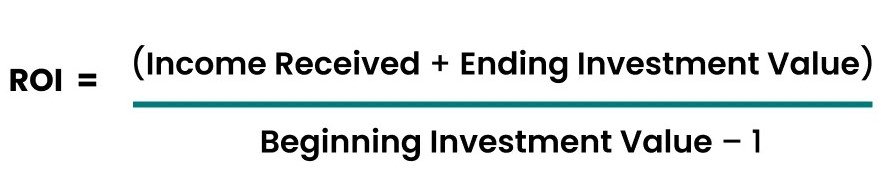
Let’s look at this with a practical calculation. Suppose you lease an apartment at $3,000 a month, which amounts to $36,000 per year for rent. You have to pay $15,000 up front for setup, furniture, and deposits.
If the gross annual income from your property is $72,000 and your total operating expenses—covering utilities, cleaning, software, supplies, and platform fees—are $24,000, then your net operating income will be $12,000. Using the formula, your return on investment is 80%. However, if revenue drops by just 20% because of local competition, your profits disappear immediately.
7 Fatal Mistakes When Evaluating Arbitrage Deals
Managing rental arbitrage requires discipline and constant suspicion. Below are the most frequent ways in which founders manage to bankrupt their businesses in expensive housing markets:
- Finding out after signing a lease that the building association strictly prohibits short-term rentals leaves you with an empty apartment you still have to pay for.
- Failing to account for platform commissions charged by Airbnb and Vrbo, which deduct 3% to 15% from every reservation.
- Underestimating turnover costs: failing to account for rapidly rising expenses for professional laundering, thorough cleaning, and restocking essential guest amenities between short stays.
- Omitting seasonality by projecting summer peak prices for all twelve months can cause severe cash shortages during the winter off-season.
- Not complying at the local level: failing to pay municipal registration fees, transient occupancy taxes, and strict night-cap limits set by city councils.
- Failing to allow for property wear and tear by not setting aside an adequate budget for broken furniture, stained carpets, and drywall damage resulting from a high number of guests.
- Omitting insurance premiums: not obtaining appropriate commercial general liability and short-term rental damage protection policies.
Aligning Your Strategy with an Arbitrage Cash Flow Model
To safeguard your business, develop a solid arbitrage cash flow model that simulates different occupancy scenarios. Check your figures at occupancy rates of 50%, 65%, and 80% to determine your break-even point.
If the property can’t make a profit at a conservative 50% occupancy level, you should pull back from the deal immediately. Even in prime locations, occupancy won’t be high if local tourism varies or new competing properties open nearby.
Also consider your average length of stay; shorter stays increase cleaning costs and wear on equipment, while longer stays reduce your potential nightly rate. Finding the right balance is essential to maintain healthy cash flow.
Utilizing a Short-Term Rental Profit Calculator
Manual spreadsheets often lead to calculation errors when managing multiple properties, so experienced operators rely on a specialized short-term rental profit calculator that combines data on dynamic pricing, cleaning schedules, and fixed overhead costs.
By automating expense tracking, you can quickly identify which units are hurting your portfolio’s overall performance. If a property still doesn’t reach your target return after ninety days, be prepared to either negotiate a lease buyout or switch to medium-term corporate housing.
When protecting your capital, always put this before vanity figures like total booking volume; a smaller portfolio with high net margins will always beat a larger one that loses money on each transaction.
Securing Your Long-Term Profitability
It is entirely feasible to scale in expensive cities, provided you account for the basic financial limitations. Don’t let the appeal of high top-line revenue blind you to your actual net income.
Always check your utility bills, monitor local tax updates, and maintain a separate cash reserve to cover at least three months’ rent when the property is vacant. If you enforce strict financial rules and use accurate analytical tools, you can build a resilient property management business that can withstand any market cycle.